
Sitting on a Planning Commission Changes How You See the Process - By Malika Junaid
Mar, 05
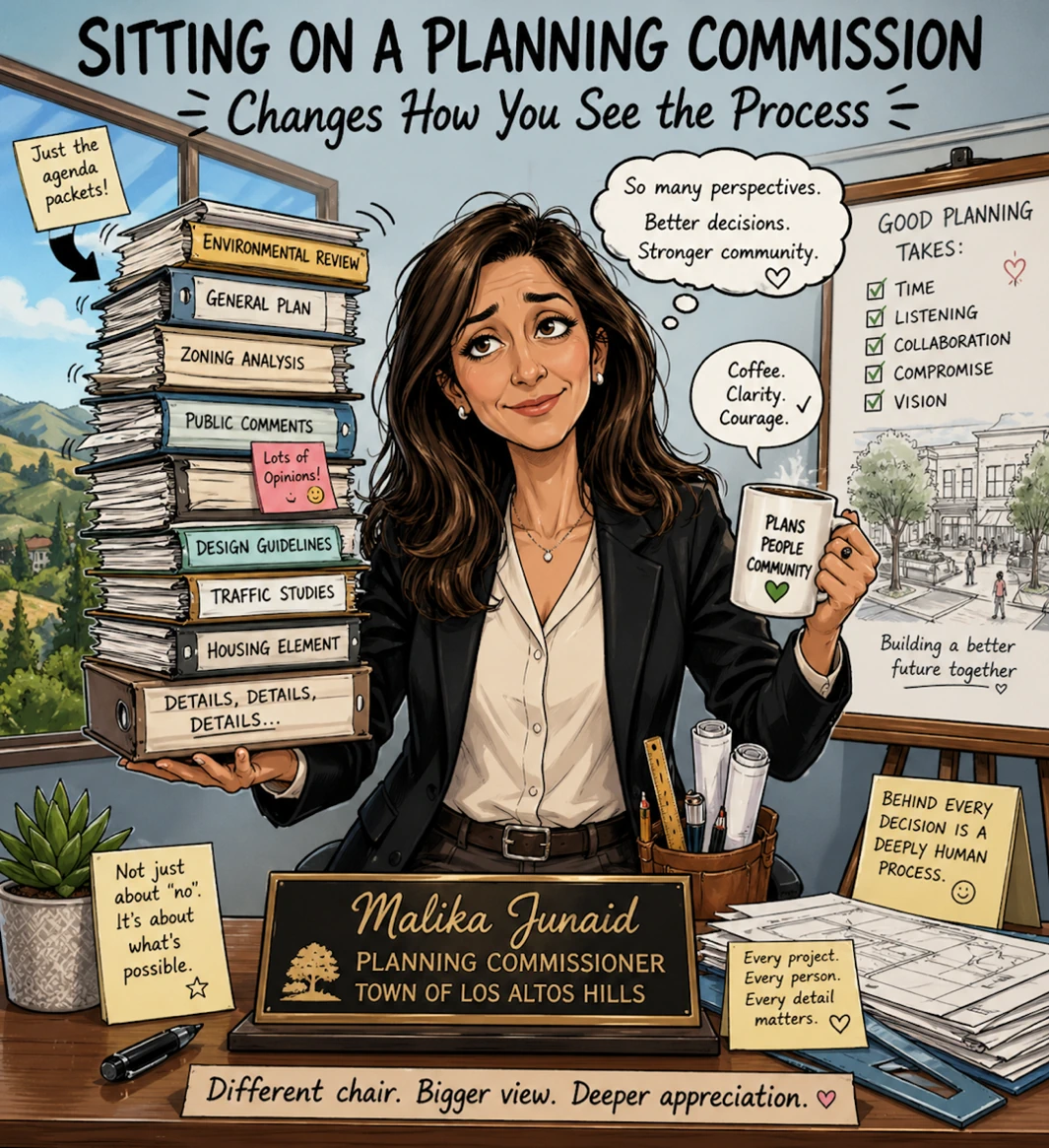
Most people who go through the planning process for the first time are surprised by how much there is to navigate. They've prepared their application carefully; they meet the requirements, they show up to the meeting, and yet the process still feels more unpredictable than it should. Not because the system is unfair, but because so much of what shapes a decision happens in places that aren't visible from the outside,
I understand why it feels that way. From the outside, the process looks like a gate. What most people don't realize is that the decision is often shaped less by what's in the application and more by what happened before and after it was submitted. Timing, sequencing, relationships with staff, these things matter in ways that nobody puts in writing anywhere.
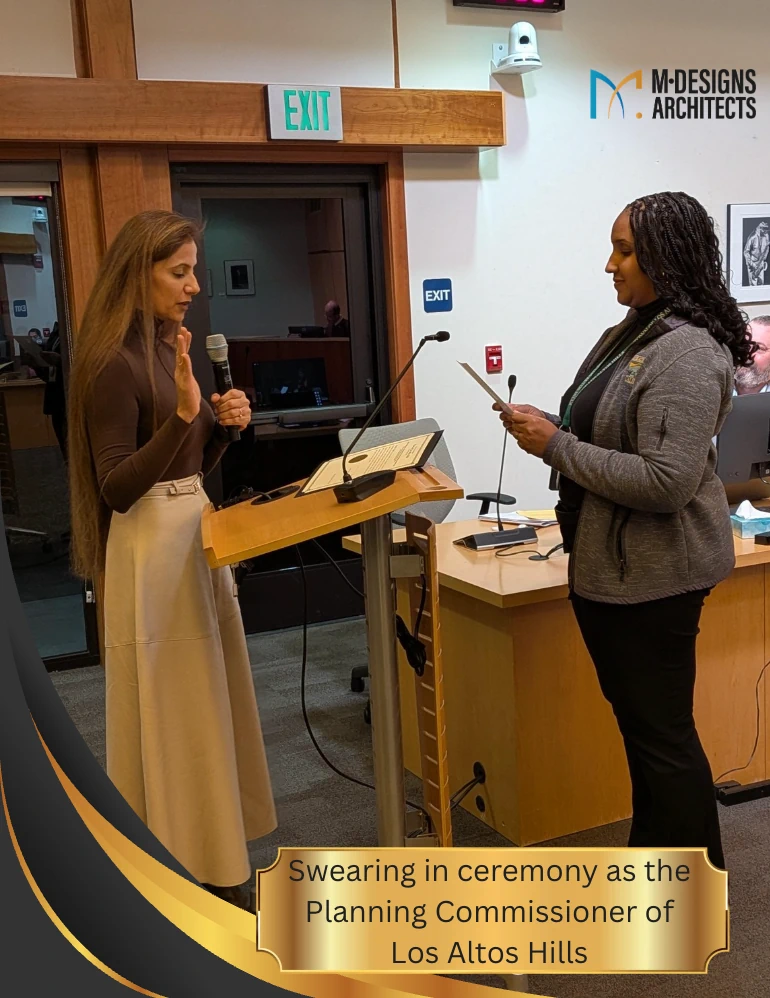
I was on the Planning Commission for the City of Los Altos for 6 years and now I am on the Planning Commission for Los Altos Hills. I took the role because I think architects have a responsibility to be in these rooms, not just designing buildings while other people decide what gets built and where.
The most important meeting is not the one the public sees. It's the staff-level meeting that happens weeks before.
By the time a project reaches a public hearing, the commission has already received a staff report with a recommendation. That recommendation carries significant weight. And that report is shaped by conversations between the applicant's team and planning staff. Going into those early conversations with vague plans and hoping for the best is one of the most common and costly mistakes I see. Coming in with specific questions, a clear understanding of the constraints, and a willingness to adjust before the formal process begins, that changes outcome.
The second thing most people don't know is that the timeline itself is a design decision. Applications that come in during busy periods, when the commission agenda is full, when staff are stretched, when there are larger community issues dominating attention move differently than applications that arrive when there's capacity to look at them properly. This sounds like insider knowledge that shouldn't matter. But it does. Knowing when to submit, when to request a pre-application meeting, when to let something sit for a few weeks rather than pushing it forward this is process knowledge that doesn't get shared nearly enough.
A project that is technically compliant can still struggle. A project that builds goodwill early with staff, with neighbors, with the commission moves through the process differently.
What makes the difference, more often than people expect, is communication; and specifically, when it happens. The applicants who do well are almost always the ones who have had real conversations early: with planning staff before anything is formally submitted, with neighbors before concerns have a chance to become objections, with their architect about what the commission is likely to focus on before they walk into the room. None of this requires anything other than preparation and genuine engagement. But it has to happen at the right time
None of this is secret. It's just knowledge that lives inside the process and rarely makes its way out to the people who need it most.
What sitting on both sides of this table makes clear is that the planning process rewards a specific kind of preparation not just technical compliance, but genuine understanding of how decisions get made, who influences them, and when. That's not something you can get from reading the municipal code. It comes from experience, from relationships, from having been in enough of these rooms to understand what they actually respond to.
The planning process can feel unfamiliar the first time you go through it. That's completely normal. What I'd say to anyone starting out is simply this, ask questions early, lean on people who know the process, and don't wait until something goes wrong to get informed. Reach out to the neighbors early in the process. Most projects, when they're well prepared and well supported, find their way through. That's been my experience on both sides of the table.